When we think about high-pressure jobs, we often envisage
busy offices, tight deadlines or taxing meetings. Yet there is another group of
employees who face unique challenges every day: those who work directly with
customers, clients, patients, service users and members of the public. Whether
responding to enquiries, resolving complaints, supporting vulnerable
individuals or providing a welcoming service, customer-facing employees are
often expected to remain calm, professional and approachable regardless of what
is happening around them or in their personal lives. For many, one of the most
demanding aspects of the role is not the work itself. It is the emotional
effort that comes with it.

The term emotional labour refers to the process of
managing and sometimes suppressing our own emotions in order to meet the
expectations of a role.
In customer-facing jobs, this can look like:
-
Remaining
patient when someone is frustrated or angry
- Maintaining
a positive and professional attitude during difficult interactions
- Staying
calm under pressure
- Demonstrating
empathy and compassion throughout the day
- Continuing
to be approachable even when feeling stressed or overwhelmed
These skills are often viewed as "part of the
job," but they require significant emotional energy. Over time, constantly
giving emotional support to others without opportunities to recharge can take a
toll on wellbeing.
A customer, client or service user usually experiences a
single interaction. What they do not see is everything that may have happened
before it. Perhaps the employee has already managed several difficult
conversations that morning. Perhaps they are balancing competing priorities,
tight deadlines or personal challenges outside of work. Maybe they are worried
about a family member, managing financial pressures, or simply having a
difficult day.
Despite this, the expectation often remains the same: greet
the next person warmly and start again. This ability to continually reset and
provide a positive experience is a remarkable skill, but it can also be
exhausting.
Most people experience occasional stress at work. However,
continuously managing difficult interactions or high emotional demands can have
a cumulative effect.
Some signs that the emotional load may be building include:
Feeling
emotionally exhausted at the end of the working day
Dreading
customer interactions
Finding
it harder to empathise with others
Becoming
more irritable or impatient than usual
Struggling
to switch off after work
Feeling
detached from colleagues, customers or the work itself
Increased
fatigue, even after rest
These experiences do not necessarily indicate a mental
health problem, but they can be signs that wellbeing needs attention.
When people think about customer-facing work, they often
focus on managing challenging behaviour. While this can certainly be part of
the role, the emotional demands are often broader than that.
Many employees are regularly exposed to:
People's
frustrations and complaints
Distressing
personal stories
Conflict
and confrontation
High
expectations
Heavy
workloads and competing demands
Pressure
to maintain excellent service standards
Even positive interactions require energy. Spending an
entire day engaging with people, solving problems and responding to needs can
be emotionally demanding, irrespective of whether the interactions are pleasant
or difficult.
Customer-facing roles often come with a unique set of
challenges when it comes to managing wellbeing at work. Whilst many
office-based roles enable employees to take time away from their desk, engage
in coping strategies or adapt their workload at times of emotional difficulty.
Conversely, many people in customer facing roles feel that they can’t take time
off a shop floor, struggle to manage their wellbeing between customer calls or
worry about the impact of not being 100% at their best on their sales targets
or performance objectives.
It’s important to remember that your wellbeing matters!

Strategies for Managing Pressure During a Busy Day
Not every difficult day is a sign that something is wrong.
Customer-facing work can be emotionally demanding and there will inevitably be
days that feel more challenging than others. The key is recognising the
difference between managing normal workplace pressures and identifying when
your wellbeing may need more attention and support.
When work is particularly demanding, the goal isn't to
eliminate stress altogether. It's to prevent stress from escalating
unnecessarily.
This technique is designed to quickly reduce physical
tension and can be done discreetly in your workplace.
- Take
a deep breath in through your nose.
- Before
exhaling, take a second shorter breath in.
- Slowly
exhale through your mouth until your lungs feel empty.
- Repeat
1-3 times.
This can be especially helpful when you're feeling
flustered, frustrated or emotionally activated.
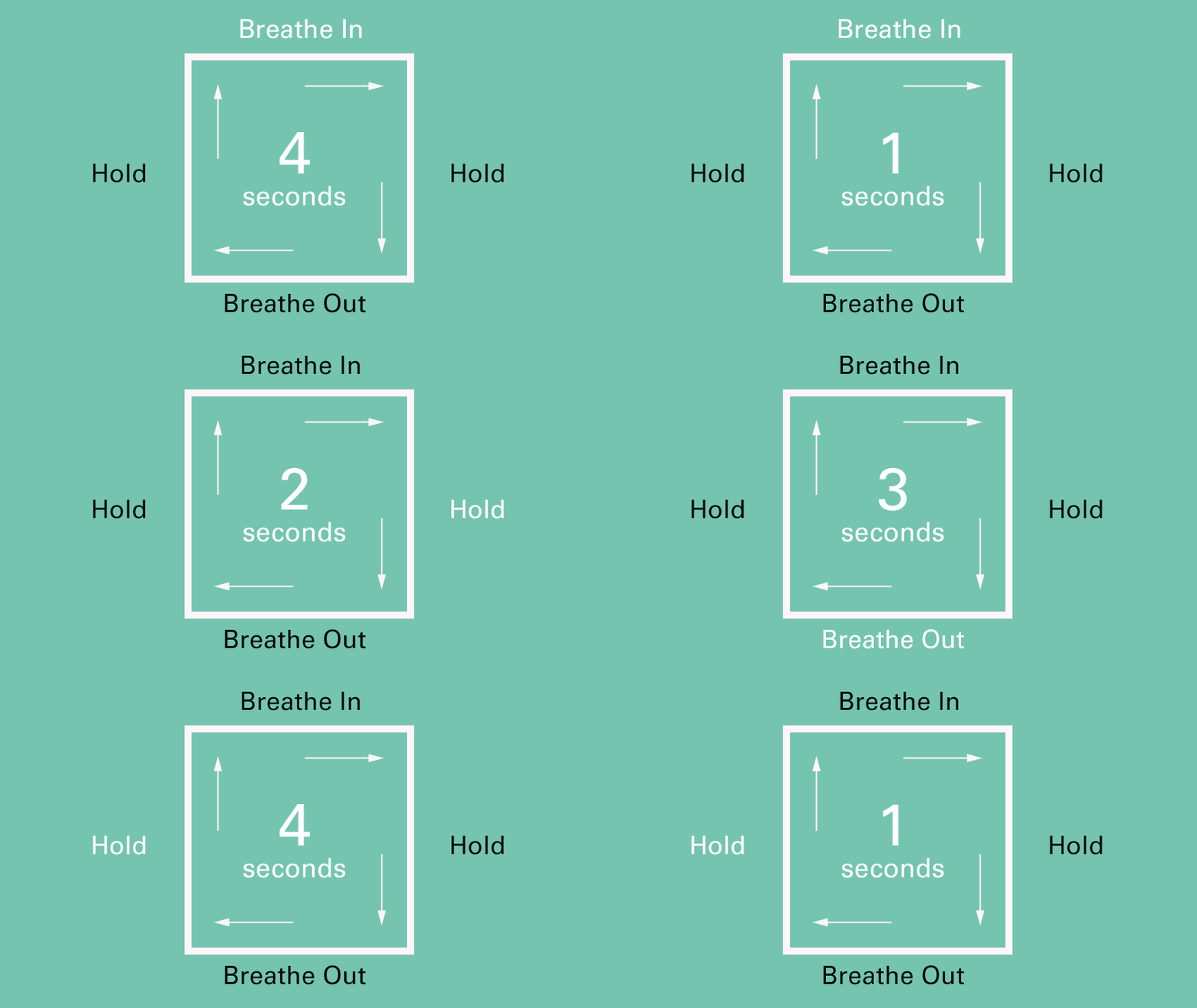
Box Breathing (4-4-4-4)
If you notice your heart racing or your stress levels
escalating during a difficult interaction, try box breathing:
- Breathe
in through your nose for 4 seconds.
- Hold
for 4 seconds.
- Breathe
out slowly for 4 seconds.
- Hold
for 4 seconds.
- Repeat
3-4 times.
If you notice yourself repeatedly dwelling on difficult
customer interactions, unresolved issues or worst-case scenarios, try setting
aside a dedicated 10-15 minute period later in the day to think about them. When
worries arise outside that time, make a brief note and return your attention to
the present task. Research suggests that containing worry in this way can
reduce rumination and improve focus.
A simple CBT and mindfulness-based strategy:
S - Stop
T - Take a breath
O - Observe what is happening (thoughts, emotions,
physical sensations)
P - Proceed with intention
This can create a valuable pause between an emotional
reaction and a considered response.
If you're becoming overwhelmed or feel yourself spiralling
into worry:
Notice
5 things you can see
Notice
4 things you can feel
Notice
3 things you can hear
Notice
2 things you can smell
Notice
1 thing you can taste
This technique shifts attention away from anxious thoughts
and back into the present moment.
Many customer-facing employees place enormous pressure on
themselves to resolve every issue perfectly. However, there is a difference
between doing your best and expecting perfection. Ask yourself: "What
would 'good enough' look like in this situation?" This can be particularly
helpful during periods of high demand when perfectionistic standards may be
contributing to stress.
There may come a point where the issue is no longer a busy
day or a difficult week. Instead, your wellbeing may be genuinely struggling.
At this point, it's important to know that you don't have to go through it alone! If you're concerned about your wellbeing, it's always worthwhile to check in with your GP. You can also take a look at the "Help and Support" section of the Workplace Wellbeing Hub to understand community resources that can support you at every stage of your wellbeing journey.